One of the hardest and most time consuming item for getting ready for this adventure is gear. Fortunately, we have pretty much dialed in our gear for this trip. We have made some adjustments to lighten the load and also purchased some snow gear. As you’ve read before, we have a major spreadsheet that we use to organize this trip plus to calculate the weight of our gear. As we make changes to our gear we adjust the spreadsheet.
In the thru-hiking world (and backpacking world) the gear is basically divided into two separate categories: base-weight and consumable weight. The base-weight consists of everything that is carried except food and water. Currently, our base-weight hovers around 16.3 lbs each, including the pack itself! This is considered “light-weight”. Incredibly, “ultra-light” backpackers have a base-weight of less than 10 lbs. We have tried to reduce the weight further but there are trade-offs with respect to comfort, safety, and cost and so we are pretty happy with our set up.
The base-weight is then divided into several other categories: the “big 3” (shelter, sleep system and backpack) and then clothing, snow gear, cooking/hydration, and miscellaneous.
The Big 3: shelter, sleep system and backpack
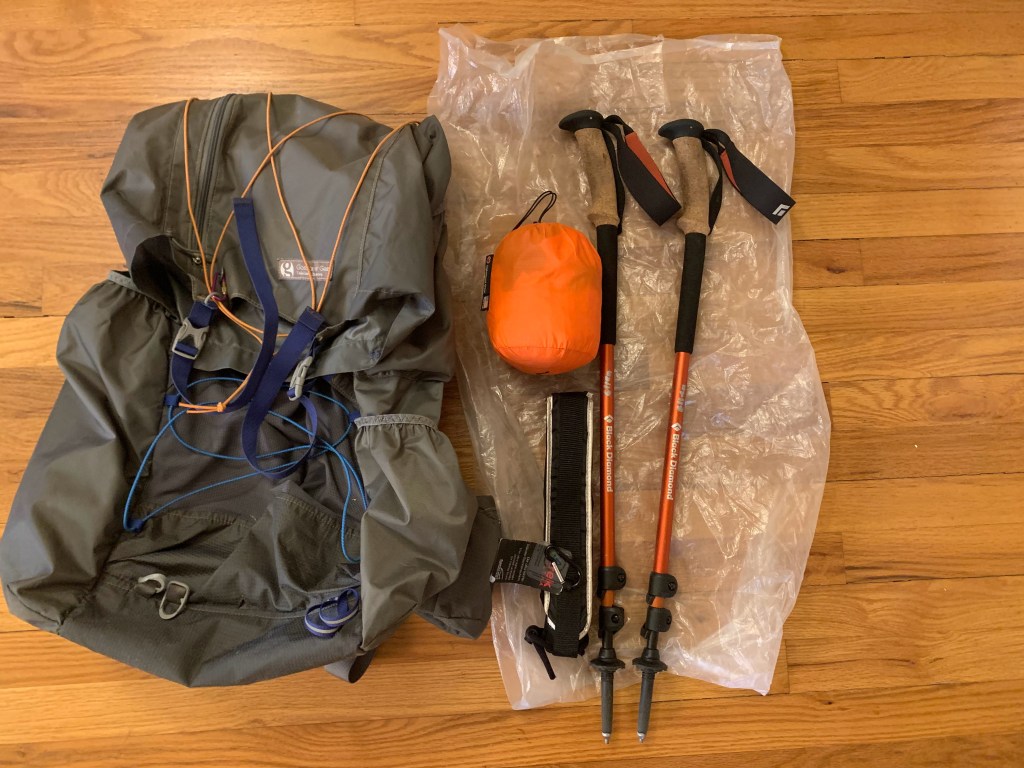
We had been using the Big Agnes Tiger Wall UL3. This is a free-standing tent. With stakes, poles and groundsheet it weighs 47 oz. or 2.69 lbs. The UL3 is relatively small and lightweight but there was room for improvement and so we decided to invest in the Zpacks Duplex tent. The Duplex is a single wall tent which needs our trekking poles for structure. It is made of Dyneema Composite Fabric (DCF), a strong lightweight and waterproof material and weighs in at a mere 25.6 oz. or 1.6 lbs including stakes and Tyvek groundsheet. This almost cuts the tent weight in half!
Both of our sleep systems are basically the same: Big Agnes Q-Core SLX sleeping pad plus Gossamer gear thin-light 1/4 inch foam sleeping pad, Feathered Friends Swallow model 20F down sleeping bag, Cocoon silk sleeping bag liner, eVent compression dry bag and an inflatable pillow. Jeff will be carrying the Big Agnes pumphouse bag for blowing up our sleeping pads.
We both have the Gossamer Gear Mariposa 60L backpack, the Lightheart Gear orange pack cover with hood, and a plastic bag liner. We also each have a pair of trekking poles and a sun umbrella.


Clothing
Hikers generally do not carry more than one set of clothing on their hike. Everyone wears the same thing each and every day. When we get to town, we will do laundry to “clean” our clothes. We will stink, but so does everyone else.
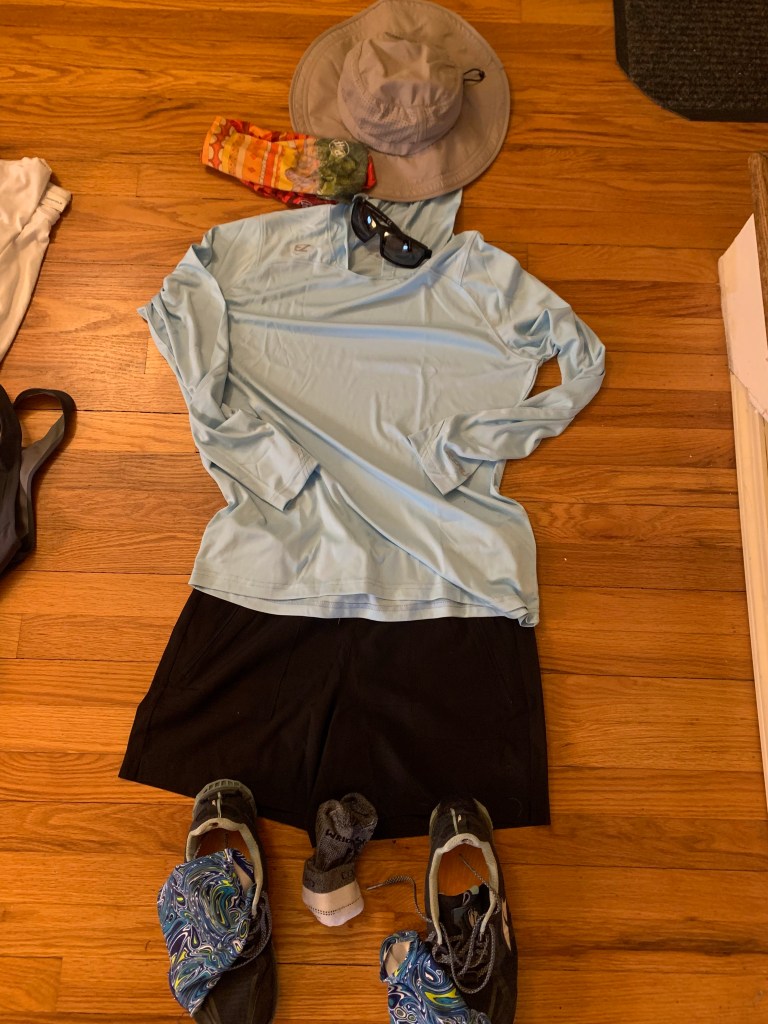
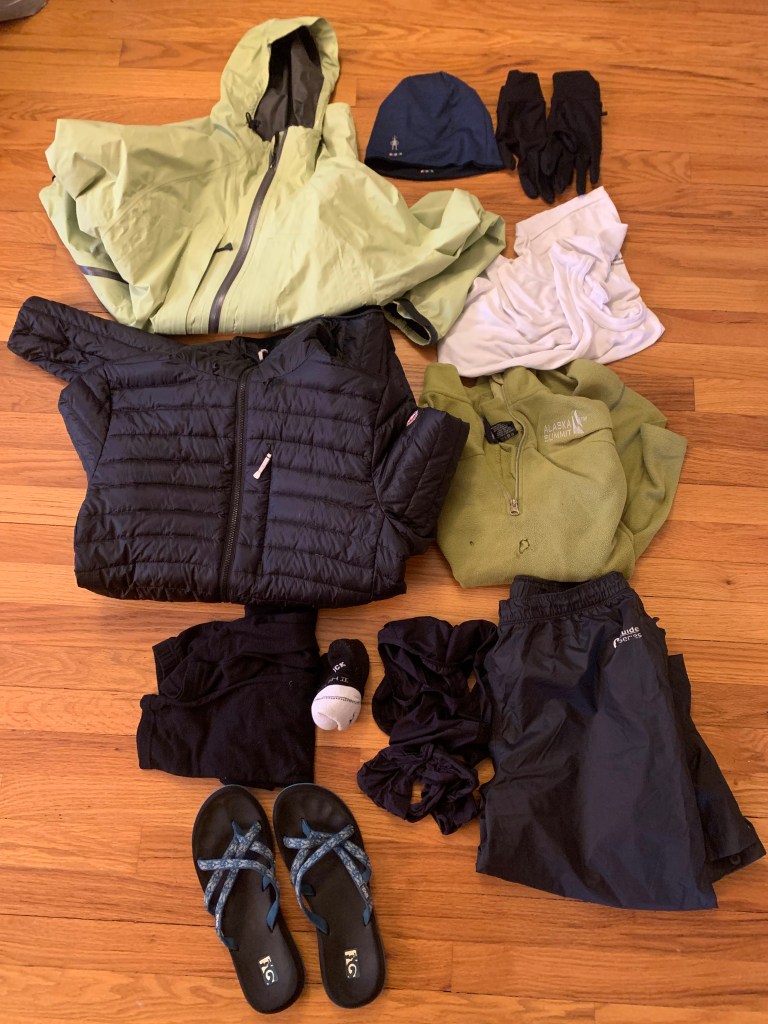
The pictures below are the clothing that Ellen will be wearing and carrying. Starting at the top, a Mission sun hat, sunglasses, a Buff, a sun hoodie, black running shorts, Exofficio underwear, Brooks sports bra, Wrightsocks ankle length socks, Dirty Girl gaiters, and Altra Lone Peak 7 trailrunners. Rain/cold gear consists of a Golite rain jacket, Columbia rain pants, Alaskan fleece shirt, SmartWool Merino beanie, REI liner gloves, Showa waterproof insulated gloves, and a Big Agnes hooded puffy. Other clothing items include an extra pair of socks and underwear, a sleeping shirt, flip flops, and leggings.
Jeff will be wearing the REI Sahara zip-off pants, a Columbia long sleeve button down shirt, Altra Olympus trail runners, Dirty Girl gaiters, Athletic works underwear, Wrightsocks ankle length socks, sunglasses, a Buff, camp shoes, and a wide brim hat. Jeff’s rain/cold gear includes Northface Alta Vista rain jacket, Columbia rain pants, Marmot Zeus puffy, Mammut fleece top, Zpacks Brushtail Possum/Wool beanie, REI liner gloves, and Showa waterproof insulated gloves.
Snow gear
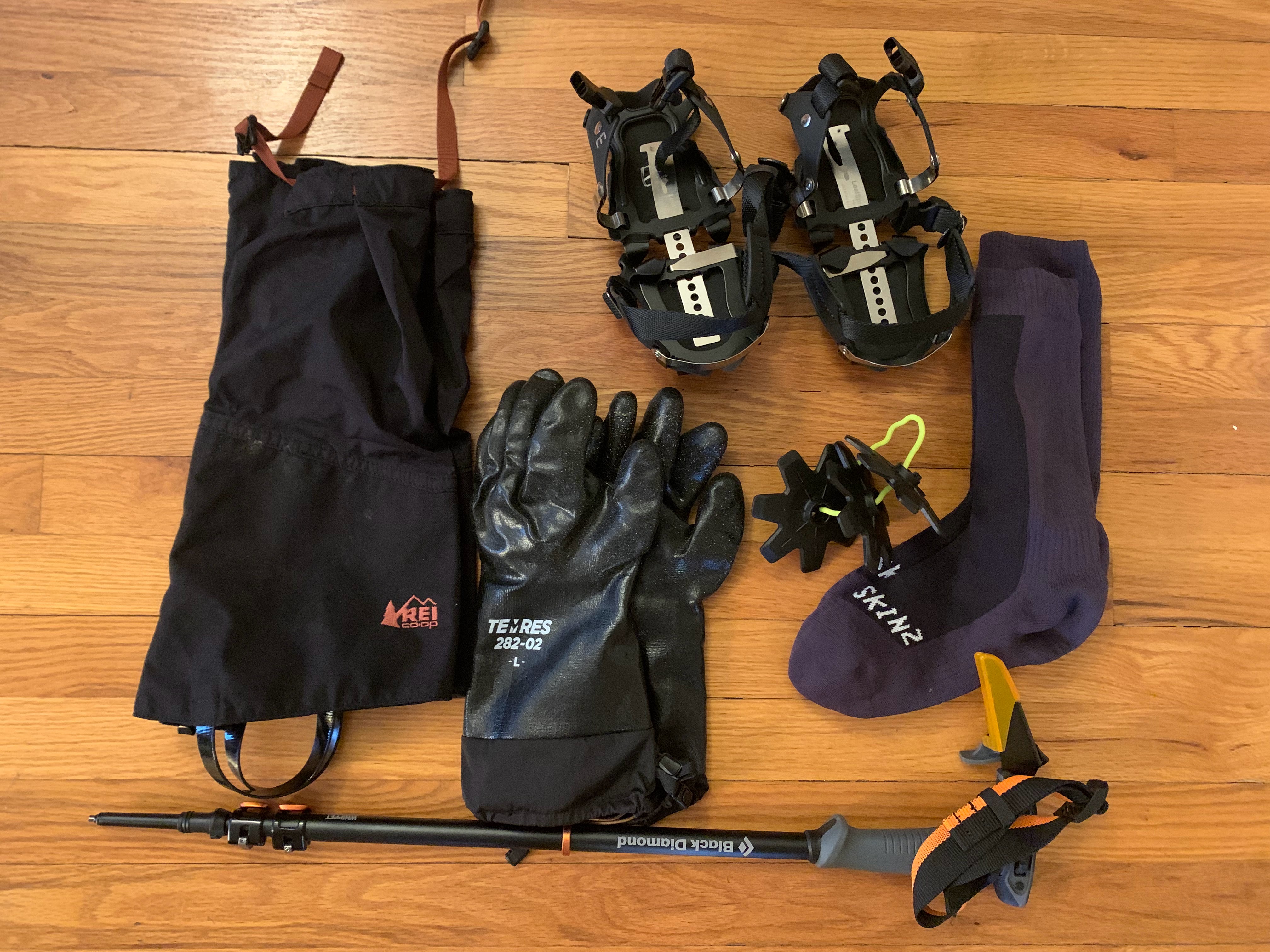
2023 will be a high snow year in the Sierra Nevada mountains. Snow is also expected as we go over Mt. Jacinto around mile marker 165 just west of Palm Springs. We have upgraded our gear by purchasing several items: Katoola K10 hiking crampons, Black Diamond Whippet ski pole, Showa Waterproof insulated gloves, dry socks, winter/snow gaiters, and snow baskets for our trekking poles.
Cooking, water and food storage gear
Ellen will be carrying our stove, fuel and pot. We are forgoing our trusty Jetboil 1L Flash stove and going a little lighter with the Olicamp XTS Aluminum 1L pot and the Olicamp ION Micro titanium stove with a small Bic lighter and a small towel. We will be purchasing along the way the 230 gram or 8.11 oz fuel canister that fits inside the pot. We each have a long spoon. Ellen has the Infinity insulated mug while Jeff has the Sea to Summit X-Seal & Go cup. Jeff will also use a Fozzils folding bowl.
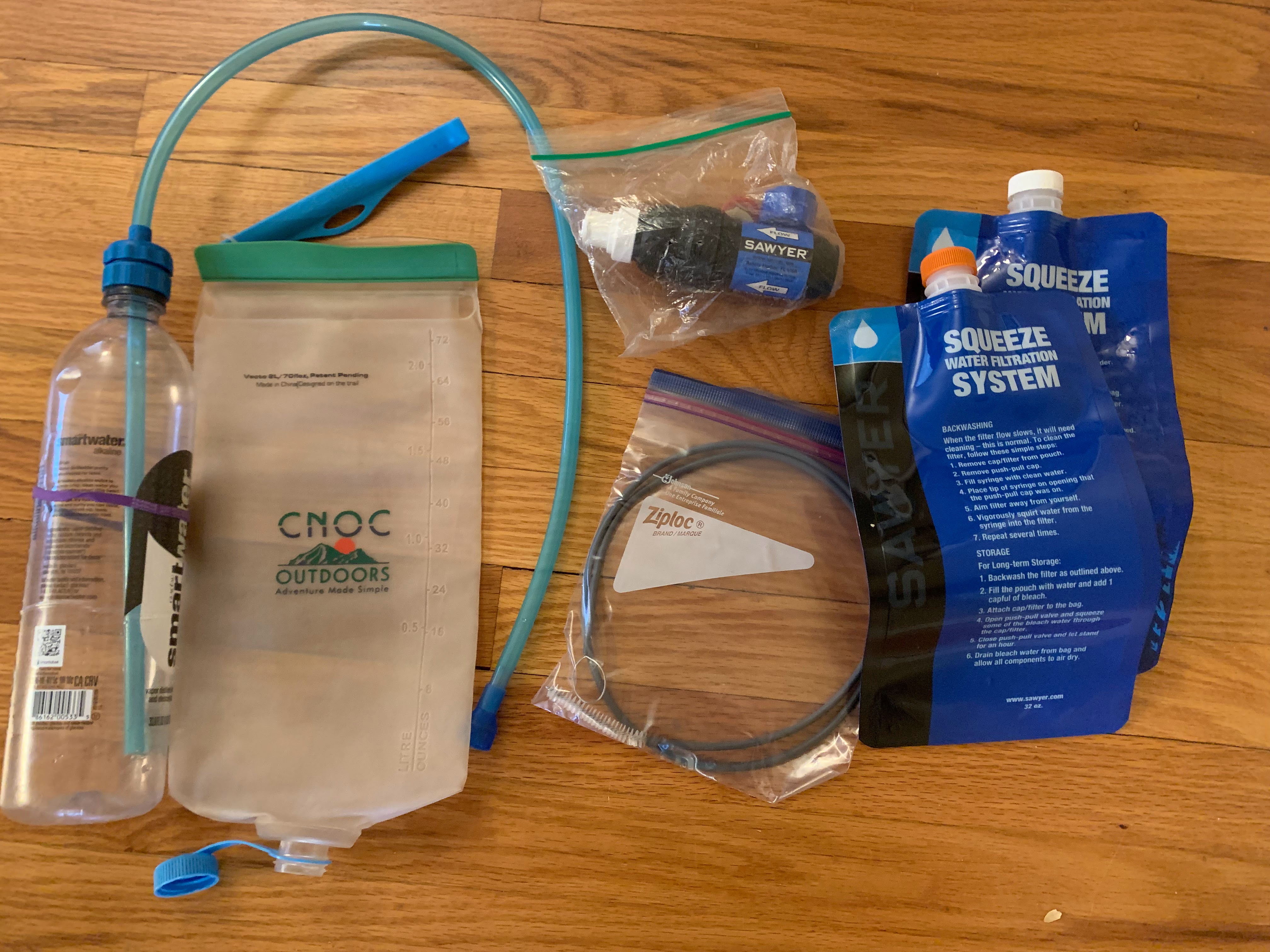
We both have the same system for carrying and filtering water. Two Smart water bottles with a SmarTube hydration tube, a Sawyer Squeeze water filter, and the Cnoc Outdoors Vecto 2L water bag. For extra water carrying capabilities we will each be carrying two Sawyer Squeeze 1L water bags. Ellen will also carry the water tube cleaning brush.
When we get to the Sierra Nevada mountains some extra gear is needs to help protect our food from bears. We each has the Opsack odor proof bags and the Ursack bear bag. Ellen has the Garcia Bear cannister and Jeff has the Bear Vault BV 500 bear canister.


Toiletries, electronics, and first aid
Ellen’s toiletries include a Deuce of Spades trowel, hand sanitizer, Kula cloth, wet wipes, trash bag, and storage bag. Jeff uses toilet paper. There is actually a “backcountry bidet” (essentially a nozzle on a water bottle), but we have yet to try this. Maybe in the future it will save on toilet paper and wet wipes.
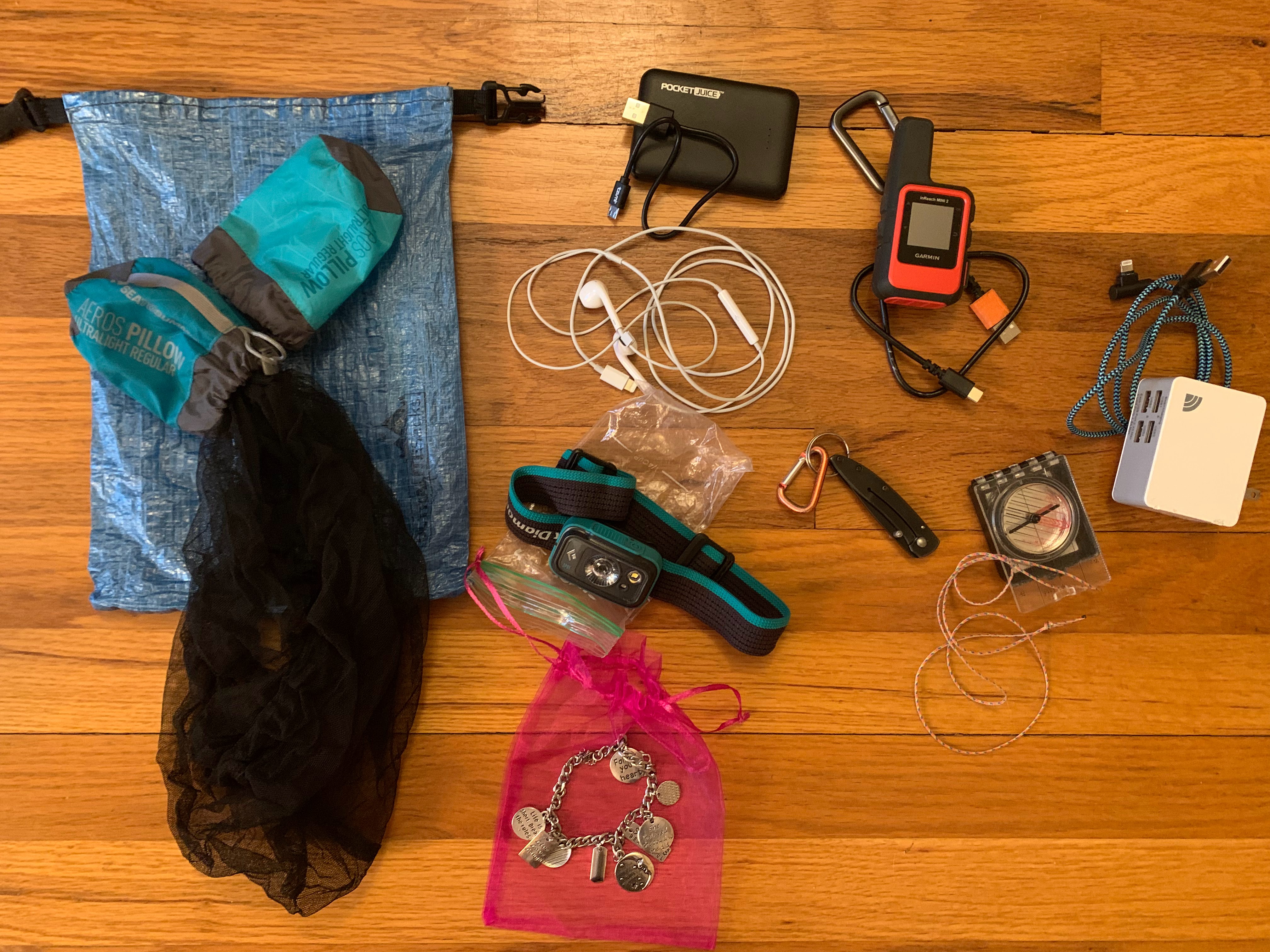
We each have the following electronics: iPhone12, Garmin InReach Mini 2, headphones, charger cords, and the Black Diamond headlamp. Ellen will carry a 5,000 mAh battery bank and wall charger, while Jeff will the Renogy 5W solar panel. We used this solar panel on our 2018 John Muir trail hike and it worked really well, especially above the tree line. We each also have a small pocket knife or multi-tool.
Ellen’s first aid / repair gear includes a small hairbrush with hair ties, strips of Leukotape, a roll of precut K-tape, variety of medicines (Ibuprofen, anti-diarrhea, antihistamine, and Mucinex), variety of Band-Aids, Neosporin, nail clippers, tweezers, toothbrush, toothpaste tables, powered soap, Tiger balm, needle w/thread, air mattress patch kit, and extra AAA batteries. Extra bonus gear, Ellen will also carry a bracelet with motivational charms that she got from her friends.

Miscellaneous
Ellen will be carrying the section maps of the PCT by National Geographic, a cork massage ball, reading glasses, small bag with ID, visa card, insurance card, and some cash. Jeff will also have a “wallet” and reading glasses.
Final Tally
As stated above, our base-weight is around 16.3 lbs. As we go into the Sierra Nevada mountains with our snow gear and bear canister, our base-weight will increase to around 23 lbs. With food for up to 9 days and 2L of water, our packs will weigh 41 lbs. However, our packs will lighten up as we eat our food.


Are you running the Garmin daily to track progress or just carrying for SOS capability?
LikeLike
Hi Jason. We don’t have our Garmins set for tracking throughout the day but we do send out a message to family as soon as we stop for the day. The message includes the MapShare link so that they can see our location
LikeLike
Good luck and have fun on your trek!
LikeLike
We are bringing sunscreen.
LikeLike
Do you bring sunscreen or just sun protective gear?
LikeLike