The questions we get asked a lot is what do we do about food? Obviously, we can’t carry all our food for five months. There are several ways to go about food: 1. resupply at each town by purchasing all the food at the local store, 2. send food packages to post offices along the trail, and 3. a combination of 1 and 2. We are opting for the combination of sending and purchasing food locally.
Food Resupply Strategy
We will start of our hike by bringing some of our purchased freeze dried food from home and then purchasing food at local grocery stores along the way. We will be going back to Ellen’s dad after about two weeks and we will again grab some of our freeze dried meals we brought with us. For the remainder of the trail before the Sierra Nevada mountains, we will be buying our food at local grocery stores.

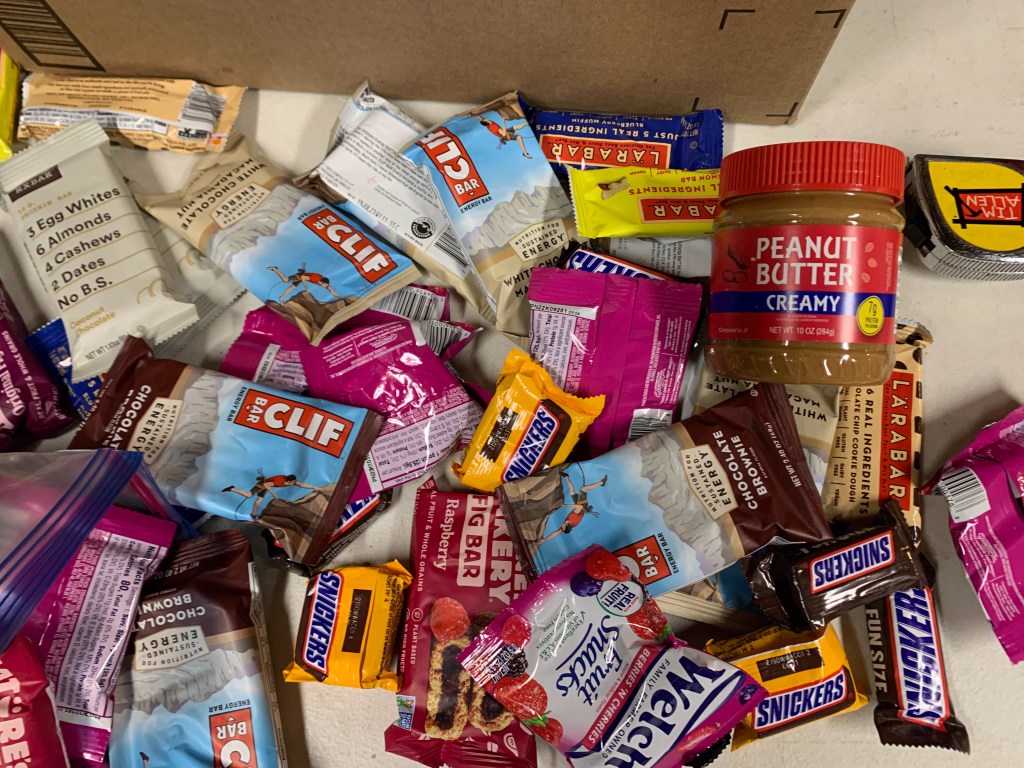
When we get to the Kennedy Meadows at mile 702 (start of Sierra Nevada Mountains), we will have a box waiting for us with our bear cannister, that includes 9 days of food we have prepared at home. Then we will get our food once again at local grocery stores. We needed to put a food box together to see if and how much food would fit into our bear cannisters. Conclusion, we can’t fit 9 days of food into our cannisters. Solution, bring the Ursack for the extra food. We will keep our most “fragrant” foods inside the bear cannister and the sealed food in the Ursack.

The amount of food that we will be carrying depends on location. On average it will be between 3 to 5 days. With longer food carries of 9 days in the Sierra Nevada mountains. There are many towns located close to the trail where we can resupply or if a town is further away, we can find a ride to town. A general rule of thumb to determine how many days to the next town is to take the distance and divide by 15. Fifteen being a good average number of miles per day. This number more than likely will increase as we get stronger or decrease as we slow down when hiking in the snow covered Sierra Nevada mountains.
Types of food
We will be burning a lot of calories and the longer we go, the more we will burn. While on trail, we will be unable to carry enough food as not to lose weight. Thus when in town, we will be eating a bunch of high protein and high calorie food. Can you say lots of pizza, burgers, pasta, etc.?
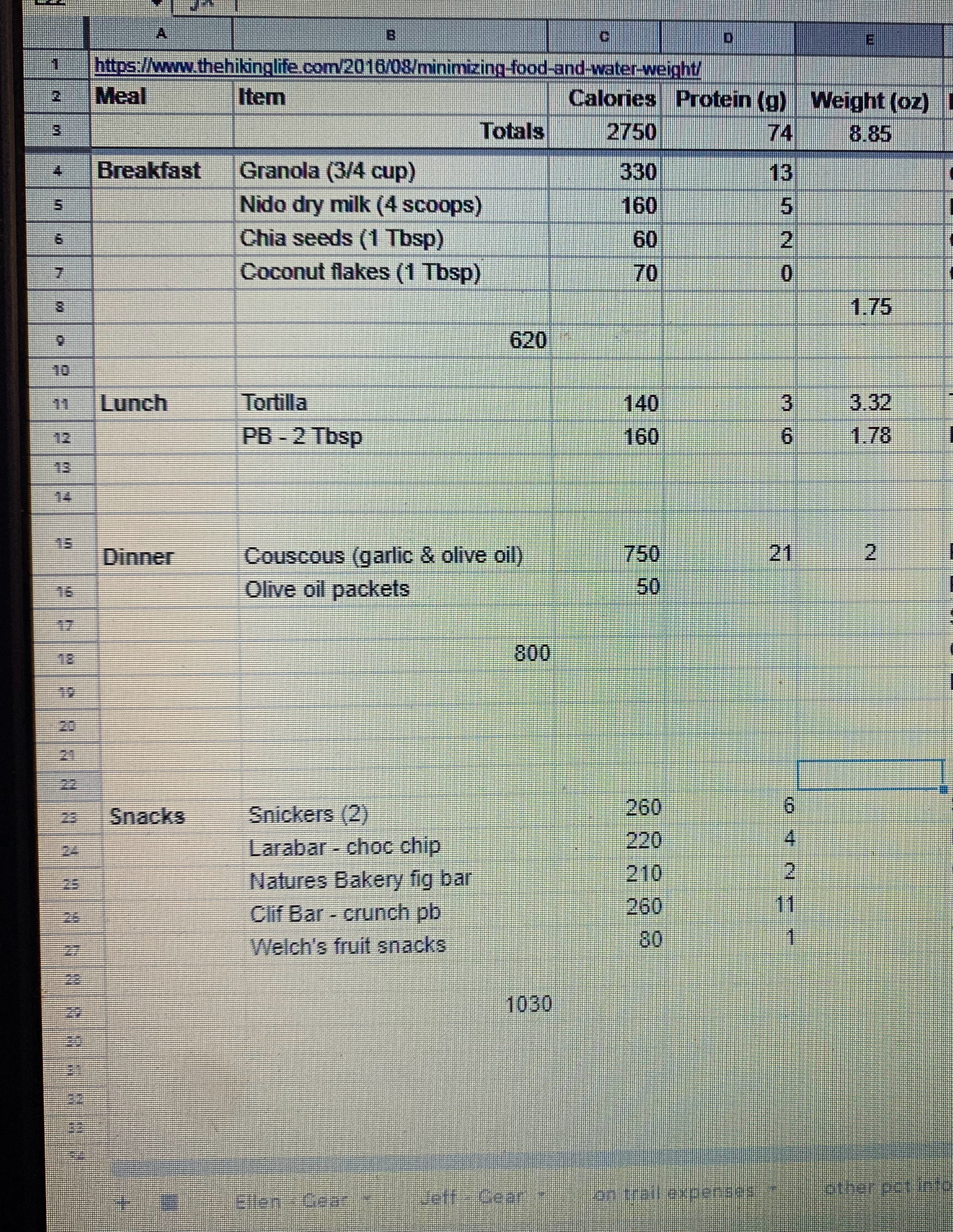
The food that we will be eating must be relatively high in calorie and protein plus it must be light weight. Food that is heavy contains a lot of of water and water weighs 2.2 lbs per 1 liter. Very heavy. Below is a spreadsheet we created (of course) to determine the number of calories and protein we would consume on a given day.
Typical foods that thru-hikers eat are ramen noodles, instant Idahoan potatoes, Knorr sides (rice or pasta), couscous, a variety of protein bars, chocolate in the form of lots of snickers bars and M&Ms, instant oatmeal or cereal with dried milk, electrolytes, instant coffee, tortillas with tuna packets or peanut butter, other forms of candy and chips. As you can see, not the healthiest diet. But as we get to towns with restaurants, we are going to make a concerted effort to eat some healthy foods to gain back some important vitamins.


 Journeys with Jeff and Ellen