In the morning, and with very cold fingers at -10F, we all met outside the Wintergreen Lodge to pack up the sleds and dogs for the drive to the trailhead. The dogs were so excited to leave! They absolutely live and love to pull sleds and also crave the attention of their new human friends. The dogs know the drill and some were patient enough to help us novices get their harnesses on. Our guides showed us how to grab the top of the harness, pick the dog up like a suitcase, and walk them toward the trailer or the sled. In “two-wheel-drive” these powerful dogs are less apt to drag you away!

Dog kennel 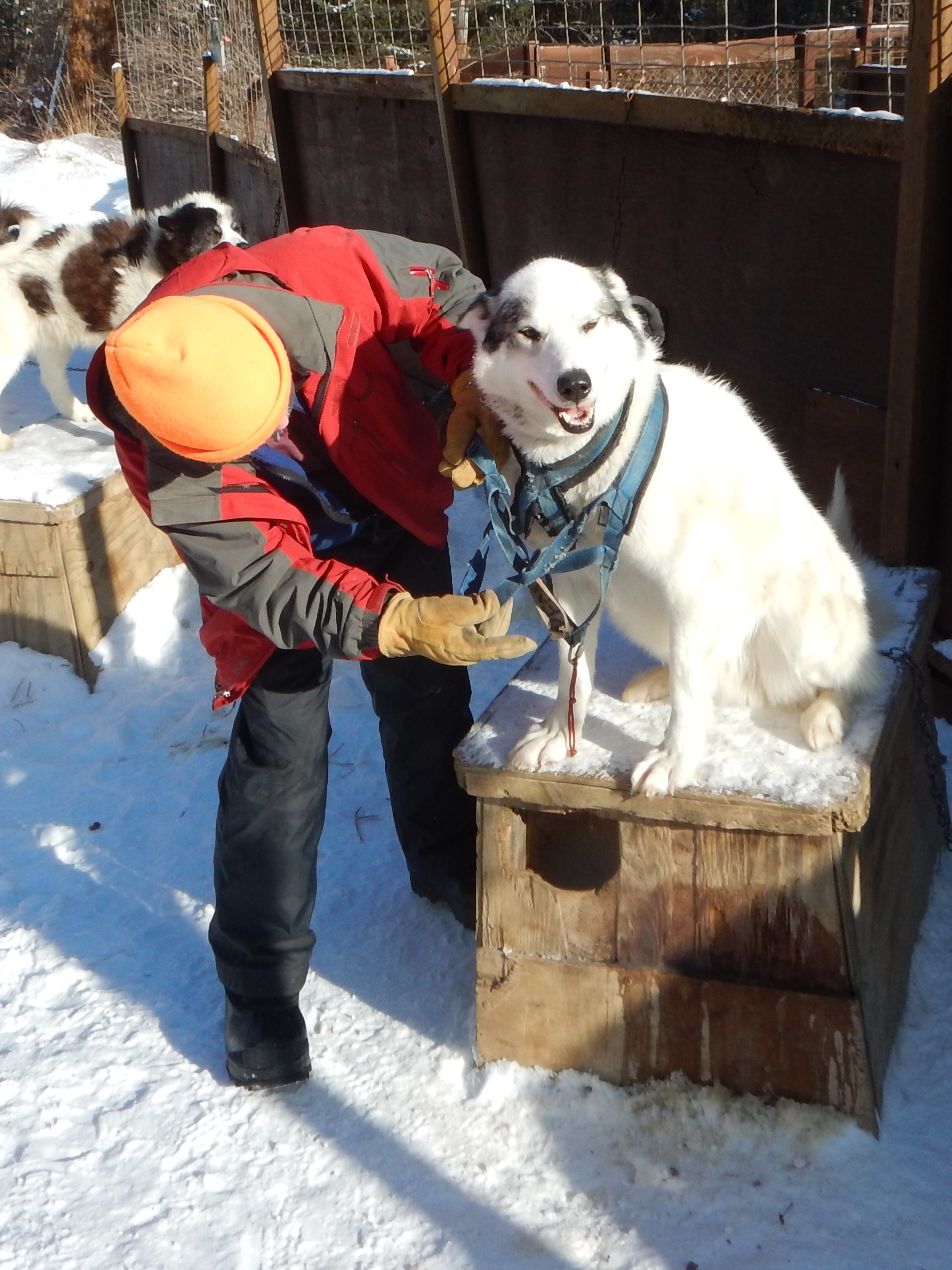
Jeff harnessing a dog 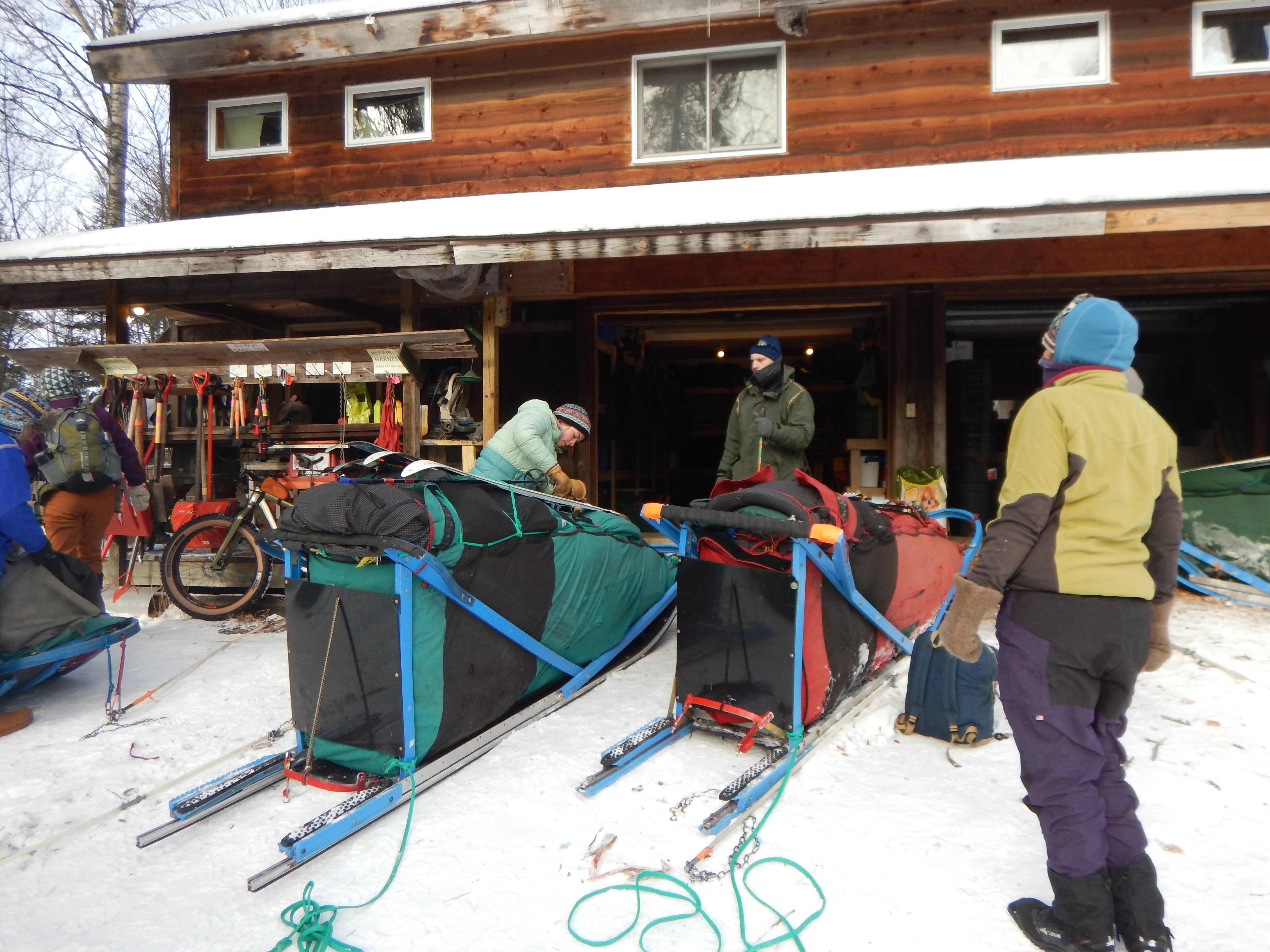
Packing up 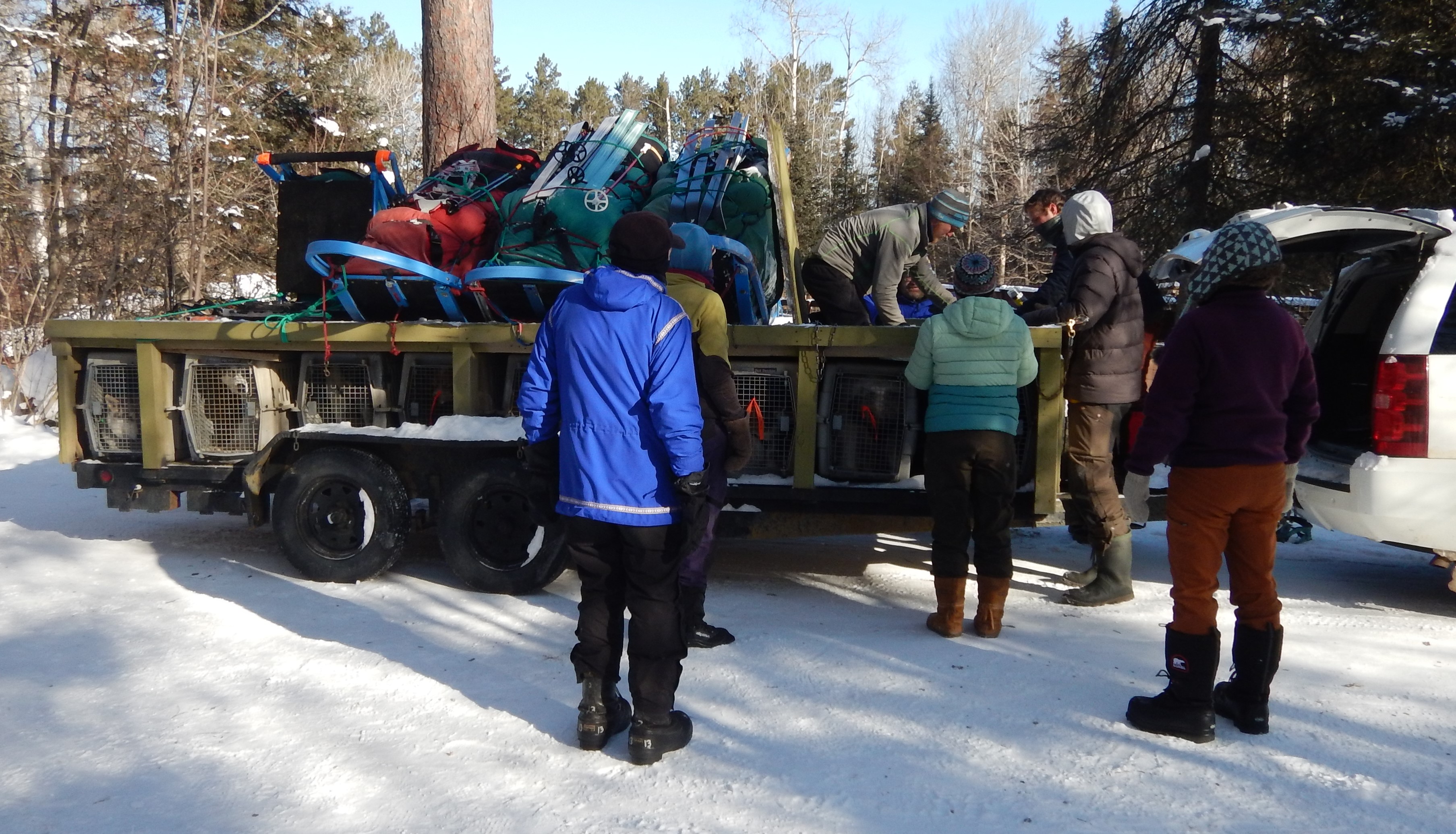
Trailer with dogs and sleds
At the Angleworm Trailhead we set off one sled at a time, downhill following a hiking trail, and behind Paul who was on backcountry skis. Ellen and I together were driving a large “freighter” sled pulled by six amazing Husky dogs. Alice and Mullet in the lead row, Bronco & Bob in the middle, and little Chive and big Tin Can Mike in the rear “wheeler” positions. Two more large sleds and one small sled followed behind us. This seemed easy until our sled drifted off-trail and rolled slightly downhill into a snowbank tossing Jeff off first and Ellen landing on top of him.

Following Paul 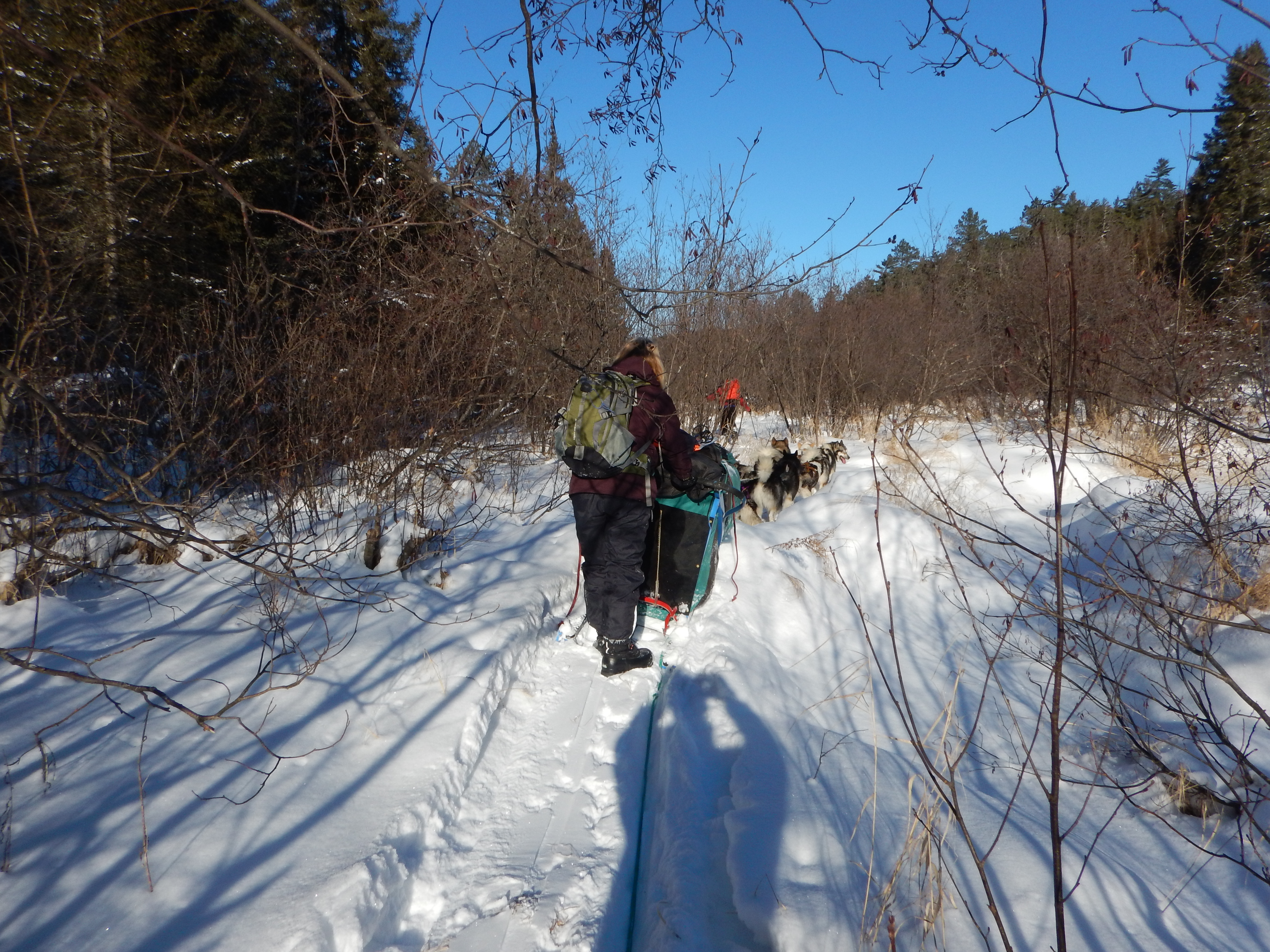
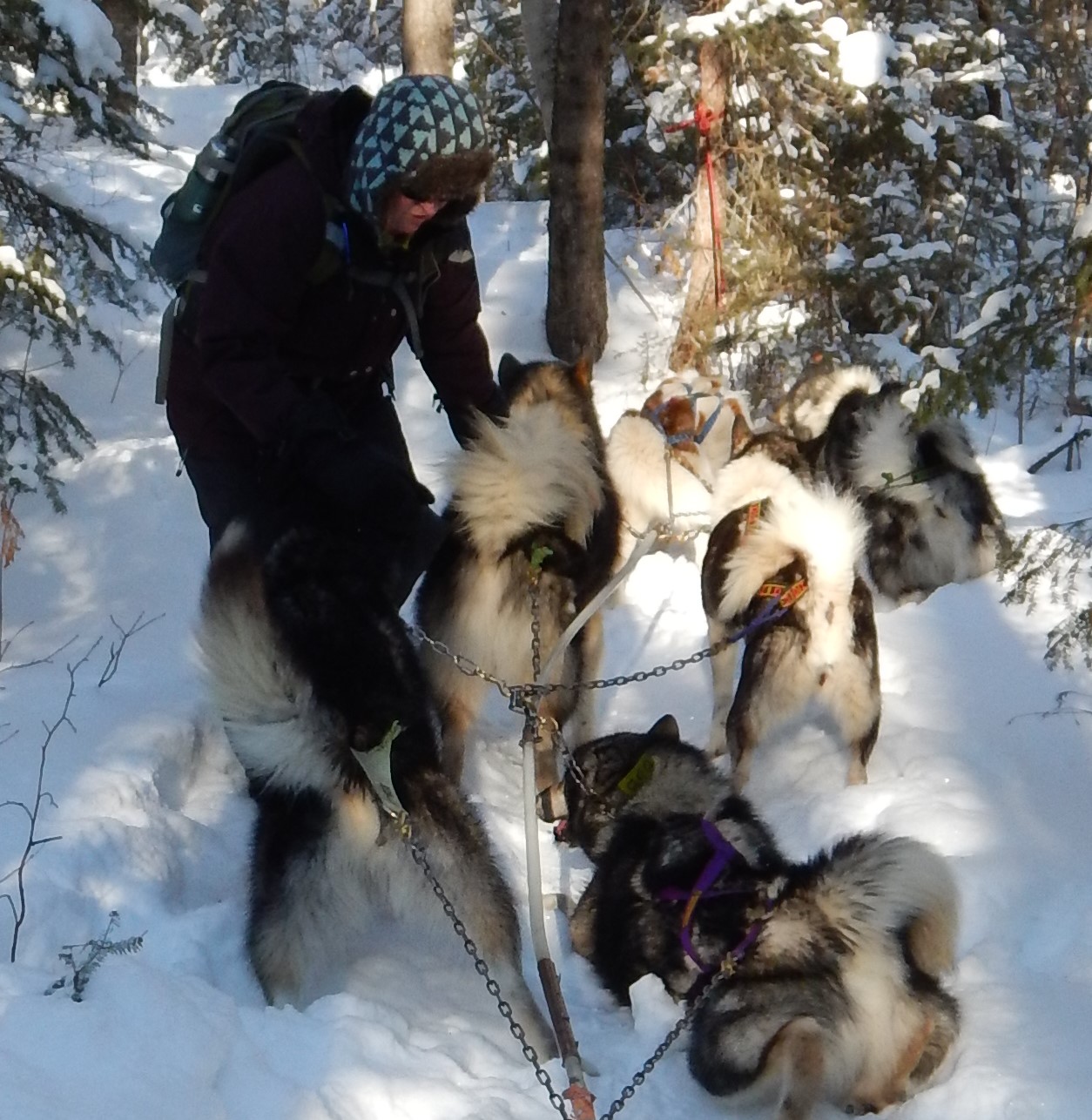
Our team: Tin Can Mike, Chive, Bob, Bronco, Alice & Mullet
After only ¾ mile we left the trail and began bushwhacking northward through a geologic cleft toward the Canadian border. We alternated travel over the winding frozen Spring Creek, over the banks, through the snow drifted grassy hummocks, and crashing through the thick alder trees. As it turns out, dogsledding can be a very physical endeavor and one of us was sometimes scraped off the sled by a passing tree!
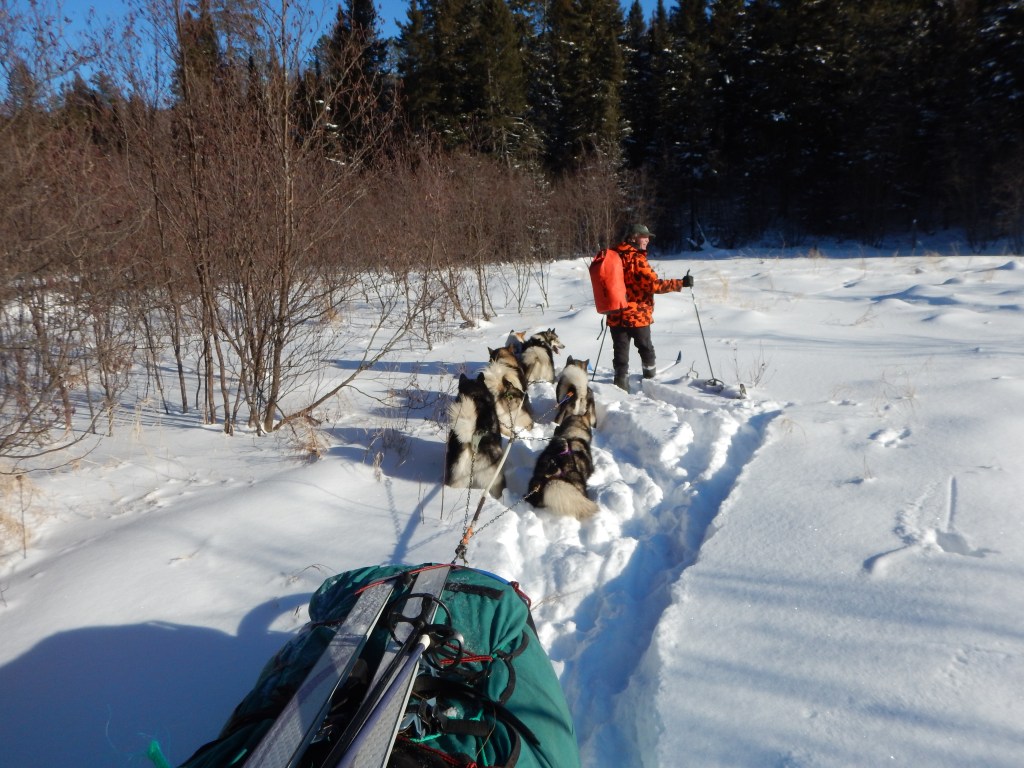
Onto the ‘draw’ 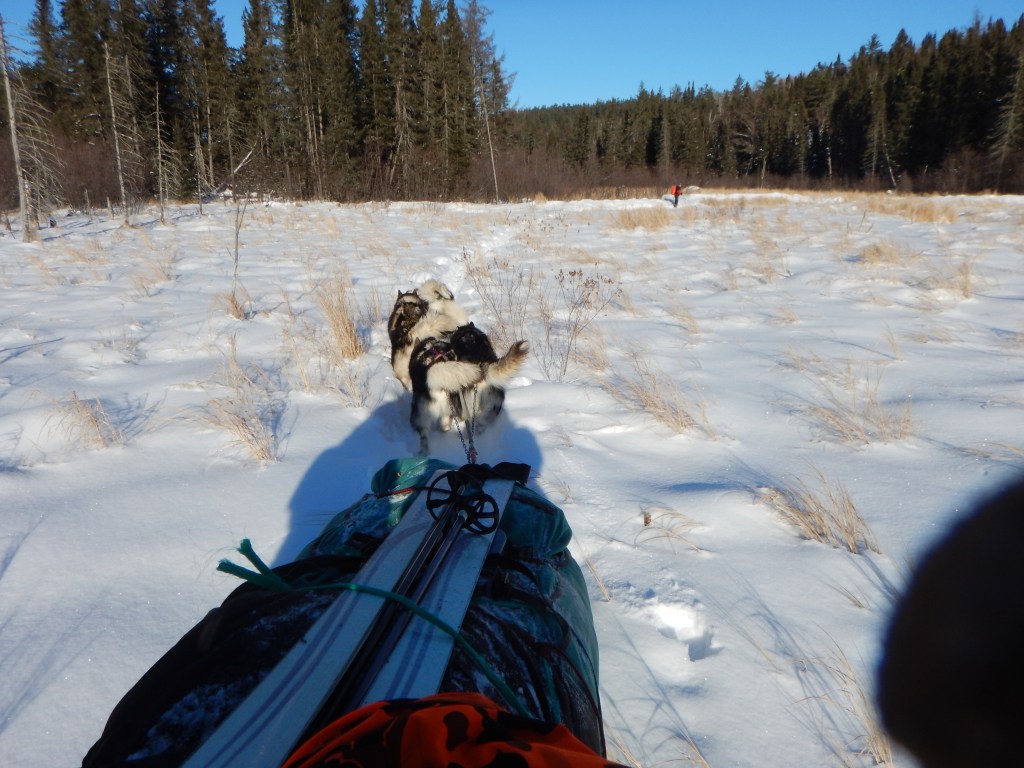
At times our heavy sled would make the creek ice snap and pop under the weight. The danger here is that the water level usually drops after the initial winter freeze. This creates an air gap between the thin ice and the water flowing underneath and so the ice will not grow thicker. Just before we arrived at a place to camp we broke through this ice shelf and our feet dropped into the water. Fortunately the sled itself did not break through and with a shout of “ready … hike!” our dogs pulled the sled and ourselves out of the creek and over the bank. Later that evening, Jeff would break through again while gathering firewood. For safety, a warm fire is an absolute necessity here! So, after tending to the dogs, prepping a fire is always the first task when making camp. Snow was boiled to water in a pot hanging on a tripod over the fire. Dinner was pasta and meatballs.
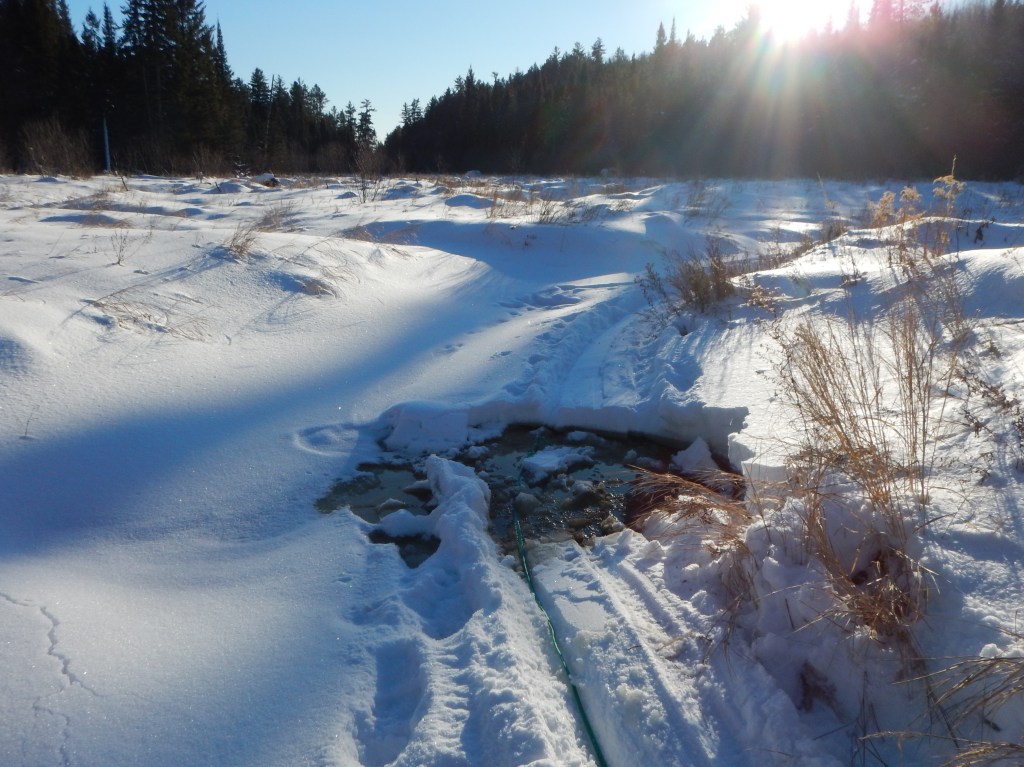
Broke through the ice! 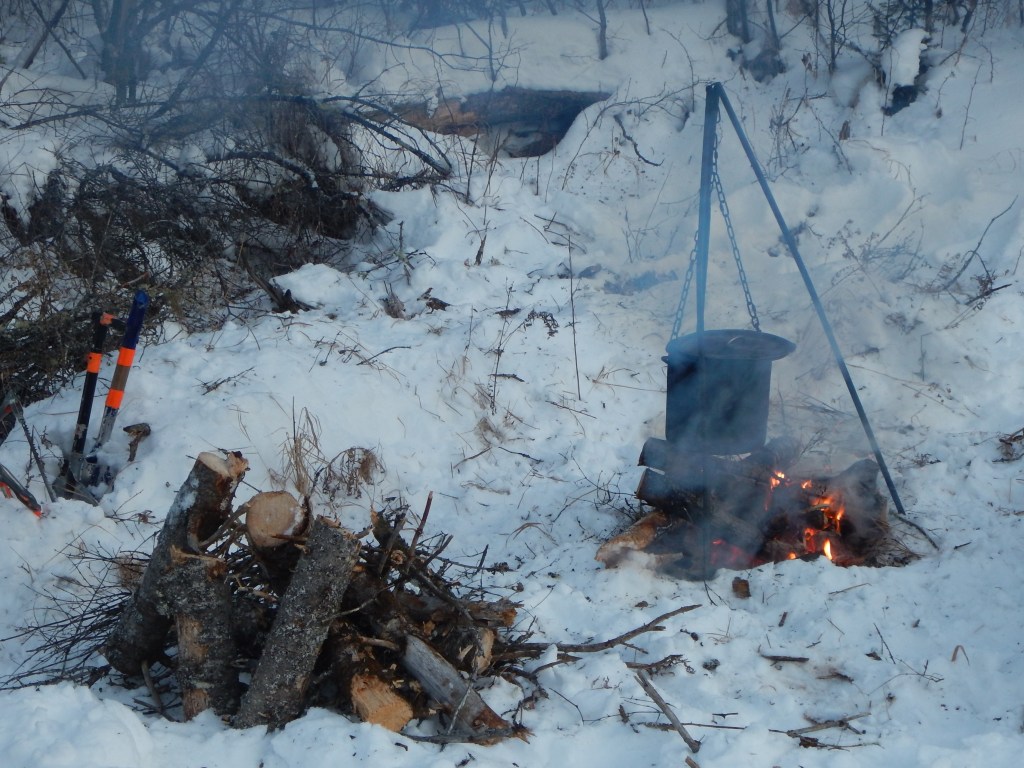
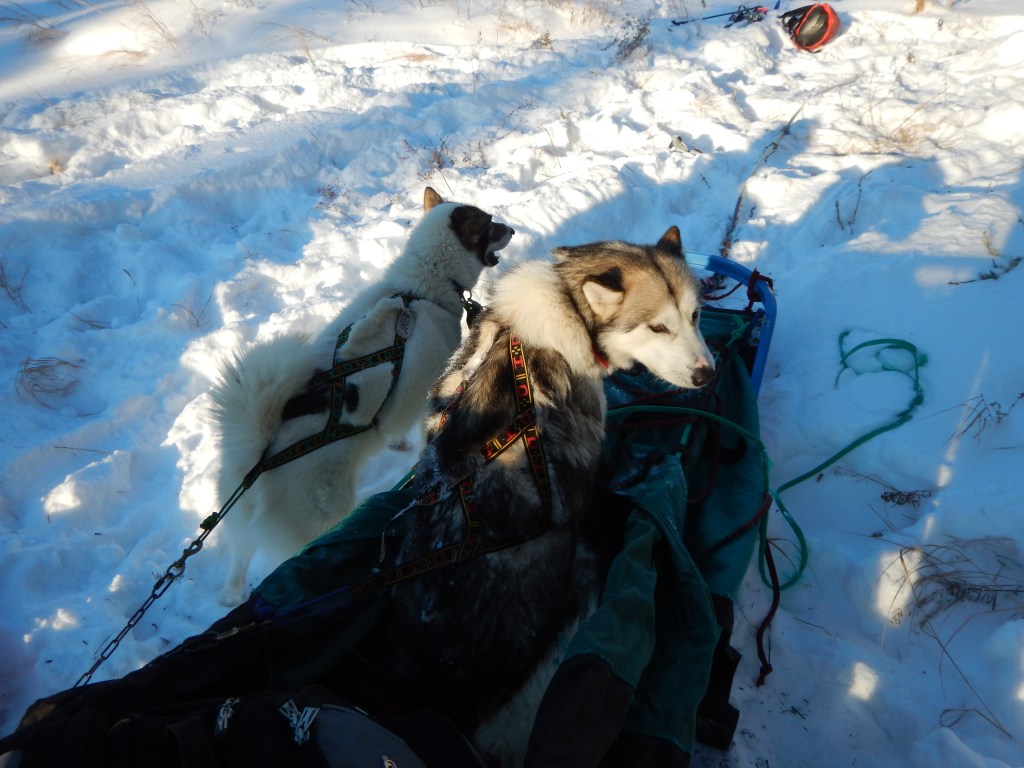
Alice & Mullet
By 8 pm we were all tired and the fire was burning down. Thirty minutes earlier we had filled one liter bottles with boiling water and tossed them into our sleeping bags. We saved some kindling and fuel wood for the morning fire and each went to our “bivy sacks”. We were apprehensive about sleeping out in the meadow with only this winter sleeping bag directly on the snow, but our Wintergreen guides assured us we would be warm … or at least safe. The moon was full in the clear sky and brightly lit the meadow. As our body heat warmed our sleeping bags we studied the stars and watched satellites pass overhead. At some point we heard a pack of wolves very close by and after a brief pause our dogs joined in with quite a chorus! In the morning Paul called this the “wilderness cantata”. He explained that our Canadian Inuit Husky dogs are the domesticated dog breed closest to wolves. What messages were exchanged between these canine cousins?

 Journeys with Jeff and Ellen